Your skin type is a starting point, not a label for life. Here is how to read it.
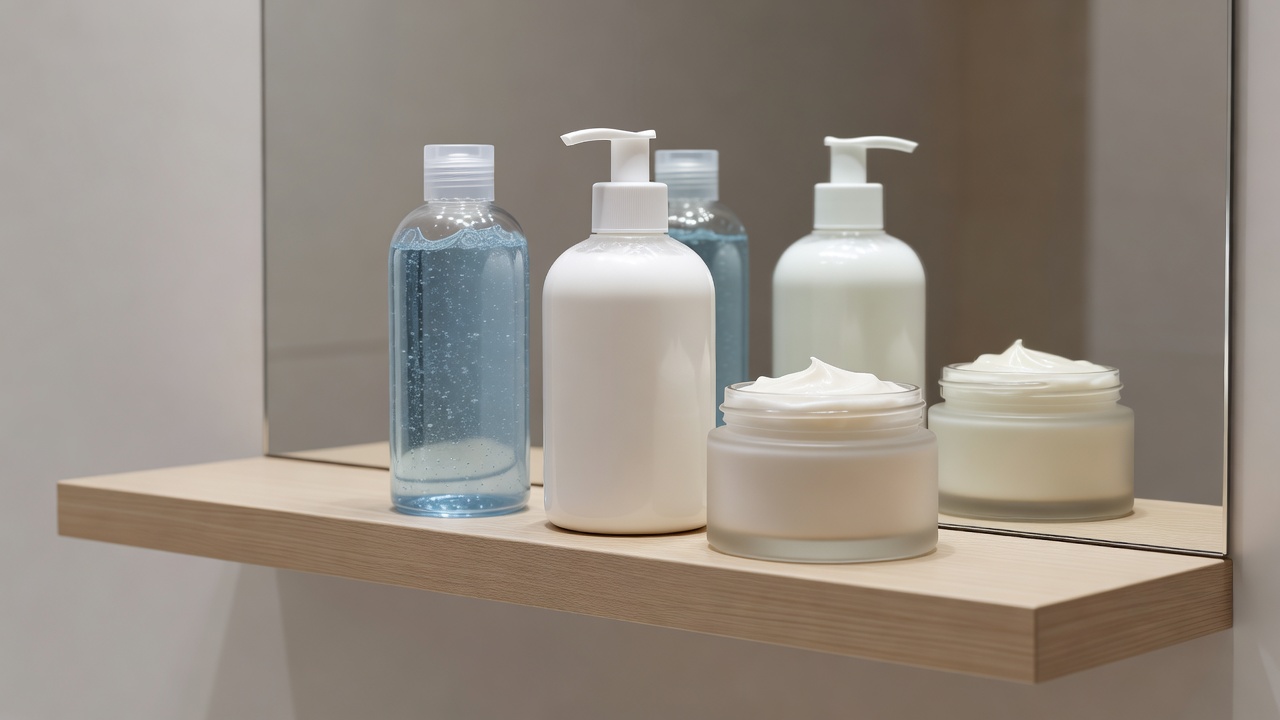
The right texture often matters more than the brand name.
Buying products before knowing your skin is like buying shoes without knowing your size. You might get lucky, but you will probably end up with blisters. The good news: working out your skin type takes about an hour and costs nothing.
The bare-face test
Wash your face with a gentle cleanser and pat it dry.
Apply nothing at all. No toner, no moisturiser.
Wait about an hour, going about your normal indoor routine.
Look in a mirror in daylight and notice how your skin feels.
Shiny all over suggests oily skin. Tight, rough or flaky suggests dry. Shiny on the forehead, nose and chin but comfortable or tight on the cheeks suggests combination. If your skin stung during washing, turned pink or itches, sensitivity may be part of your picture whatever your oil level.
Oily skin
Your sebaceous glands are generous. That often comes with visible pores and occasional breakouts, but also tends to mean fewer fine lines over time.
Cleanser: gel or light foam, not harsh or squeaky.
Moisturiser: oil-free gel or lotion labelled non-comedogenic.
Helpful extras: niacinamide in the morning, salicylic acid once or twice a week.
Avoid: stripping your skin dry, which can leave it irritated rather than less oily.
Dry skin
Your skin makes less oil and loses water more easily, so it can feel tight and look dull or flaky.
Cleanser: cream, milk or balm cleansers.
Moisturiser: richer creams with ceramides, glycerin, shea butter or squalane.
Helpful extras: lactic acid once a week for flakes, a humidifier in winter.
Avoid: hot showers on the face and alcohol-heavy toners.
Combination skin
The most common type. Your T-zone is oilier than your cheeks, and the balance can shift with the seasons.
Cleanser: a mild gel cleanser used everywhere.
Moisturiser: a light lotion all over, plus a thin extra layer of cream on dry patches.
Helpful extras: "multi-masking", using a clay mask on the T-zone only.
Avoid: treating your whole face as if it were the oiliest part.
Sensitive skin
Sensitivity describes how skin reacts rather than how oily it is. It may sting, flush or itch with many products.
Cleanser: fragrance-free, low-foam, short ingredient list.
Moisturiser: simple barrier creams; mineral sunscreens with zinc oxide are often well tolerated.
Helpful extras: patch testing every new product.
Avoid: introducing several products at once, and strong fragrance or essential oils.
Skin type is a forecast, not a fixed fate. Hormones, climate, age and stress all move it around.
Skin type versus skin concern
A skin type is your baseline: how much oil you make and how easily you lose water. A skin concern is something you want to work on, such as breakouts, dark spots, redness or fine lines. You can have dry skin with breakouts, or oily skin with sensitivity. Choose textures for your type and active ingredients for your concern.
How to patch test
Apply a small amount of the new product to the same spot, such as behind the ear or along the jawline, once or twice a day for about a week. No redness, itching or bumps? You are good to go. This does not guarantee zero reactions, but it catches many problems before they reach your whole face.
When it is not a skin type
Persistent redness with visible small vessels may be rosacea. Very itchy, dry patches could be eczema (atopic dermatitis). Deep, painful breakouts may be acne that responds best to medical treatment. The NHS and dermatology associations recommend seeing a professional for these, and a good routine supports, rather than replaces, that care.